Pinellas County · Florida
Commercial Moving Company Serving Downtown Clearwater
Tri Lece Movers relocates Clearwater businesses with crew sizes and schedules matched to your operations, not a one-size-fits-all package.
Based in Clearwater and serving Pinellas County. An estimate is prepared from your move details and confirmed in writing before your date is held.
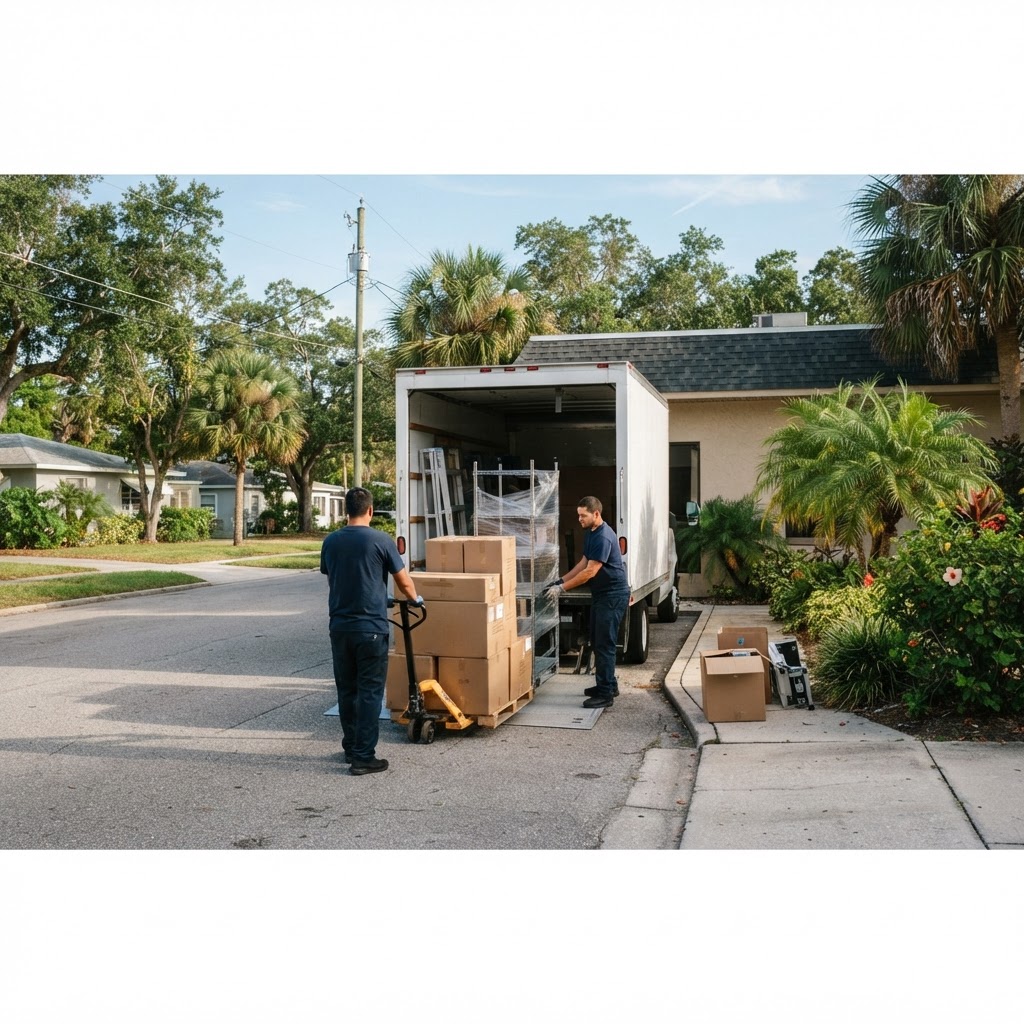
Moving a business is not the same as moving a home. Inventory has to stay organized, equipment has to arrive undamaged, and your staff needs to be productive again as quickly as possible. Tri Lece Movers is based in Clearwater and works with offices, retail spaces, and small commercial operations throughout the city and across Pinellas County. Every commercial move is planned around your floor plan, your access points, and the hours when disruption to your operation is smallest. Before anything is loaded, the crew understands what is fragile, what is heavy, and what order things need to come off the truck.
What a Commercial Move in Clearwater Involves
A commercial relocation covers the physical move of furniture, equipment, shelving, files, and supplies from one business address to another. That can mean a single-room office, a multi-suite professional space, or a retail storefront moving to a new block. The scope determines the crew size, the number of trips, and how long the job takes.
Downtown Clearwater has a mix of older low-rise office buildings near Cleveland Street, newer professional suites closer to the bluff, and ground-floor retail along the main corridors. Each building type brings its own access realities: narrow hallways, shared elevators with time restrictions, loading zones shared with other tenants, or street parking that requires coordination with the city.
Understanding those details before moving day is what separates a smooth commercial move from one that stalls. Tri Lece Movers reviews the pickup and delivery addresses in advance so nothing is a surprise when the crew arrives.
Planning the Move Around Your Operating Hours
Most businesses cannot afford a full day of downtime. That is why scheduling is built around your hours, not around a standard 9-to-5 window. Early morning starts, evening moves, or phased moves over multiple days are all options the crew can accommodate depending on your situation.
A phased approach works well when you need part of your operation running while the other half relocates. For example, workstations in one area can be moved and set up at the new address while staff continue working from the remaining space. The sequence is mapped out before the first box is touched.
If your building has elevator or loading dock time restrictions, those windows drive the schedule. Downtown Clearwater parking enforcement is active on weekdays, so moves that require a truck on Cleveland Street or the adjacent blocks need to account for metered zones and no-parking hours.
Preparing Your Space Before the Crew Arrives
The more preparation done before moving day, the faster and cleaner the move goes. That means files boxed and labeled, cords bundled and tagged by workstation, and any furniture that disassembles partially broken down if possible. Loose items left on desks or in open drawers slow the crew and create more risk of damage.
Shelving units present a specific challenge. Freestanding shelving should be cleared of all contents before the crew arrives. Heavy commercial shelving that bolts to a wall needs to be assessed in advance so the crew can plan whether it comes apart in sections or travels as a unit. Let the team know about any shelving, racking, or fixtures during the planning conversation so the right equipment comes with the truck.
Label every box with its destination room or zone at the new address, not just its current location. That one step allows the crew to place items directly where they belong rather than staging everything in one room for you to sort later.
- Clear all shelving of contents before moving day
- Bundle and label cables by workstation or desk
- Box and seal all files; label with destination zone
- Identify any wall-mounted fixtures or bolted shelving in advance
- Set aside anything that moves with employees personally
Protecting Equipment and Furniture During the Move
Office furniture takes more abuse during a move than most people expect. Desk corners, monitor screens, filing cabinet drawers, and chair bases are all vulnerable if they are not padded or secured properly. The crew uses moving blankets, stretch wrap, and appropriate packing materials to protect each piece.
Electronics and peripherals should be packed in boxes with adequate cushioning rather than moved loose. If original packaging is available for monitors, printers, or specialty equipment, use it. If not, the crew can advise on how to pack individual pieces or handle packing as part of the job through the company's packing services.
Fragile or high-value equipment such as a large-format printer, a commercial coffee machine, or medical or salon equipment should be flagged explicitly when you describe your inventory. Knowing what requires special handling lets the crew bring the right materials and allocate time appropriately.
Access, Parking, and Building Logistics in Downtown Clearwater
Parking a moving truck in Downtown Clearwater requires planning. Many blocks have metered street parking with two-hour limits during business hours. Loading zones exist in some locations but may be shared or restricted. For moves in multi-tenant buildings, the property manager may have rules about which entrance the crew uses and when the freight elevator is available.
Confirm with your building manager before moving day: elevator reservation requirements, any certificate of insurance the building requires from the mover, and whether the loading dock can accommodate the size of truck being used. These details matter more in commercial moves than in residential ones and catching them early prevents delays on the day.
At the destination, do the same check. If the new space is in a building with its own management, get the same information for that address. The crew needs to know what they are walking into at both ends.
What to Expect from the Crew on Moving Day
The crew arrives with the truck, the padding materials, and the information gathered during planning. The first few minutes are a walkthrough: the lead mover confirms the inventory, identifies anything that changed, and sets the order of operations. That walkthrough keeps the job organized and gives you a chance to flag anything that needs special attention before it gets loaded.
Items are wrapped, loaded in the sequence that makes unloading efficient, and secured in the truck before anything moves. At the destination, the crew places furniture and equipment in the rooms or zones designated on your labels. If a piece lands in the wrong spot and needs to shift, the crew handles it before they leave.
Communication during the move is straightforward. If something unexpected comes up, such as a piece that will not fit through a doorway or a piece of shelving that is heavier than it looked, the lead mover tells you immediately so you can make a decision rather than finding out after the fact.
What Affects the Cost of a Commercial Move
No price exists until the details of your specific move are known. The factors that shape what a commercial move costs include the size of the crew needed, the time the job is expected to take, travel distance between the two addresses, access conditions at each location, and the full inventory being moved.
Moves that require specialized handling, extra packing, or tight scheduling windows take more crew time and planning. A straightforward move of a small office suite a few blocks away is a different job than relocating a full floor of a professional firm across town. Both are assessed individually.
You can start describing your move through the moving price calculator on the website. That gives the team enough detail to prepare a written estimate based on your actual situation. There is no quote before those details are known.
- Crew size required for the inventory and timeline
- Total service time including loading, travel, and unloading
- Distance between pickup and delivery addresses
- Access conditions: stairs, elevators, loading docks, parking
- Any specialty items requiring custom handling or packing
Common Mistakes Businesses Make When Planning a Commercial Move
Underestimating the volume is the most common mistake. A suite that looks manageable often has storage closets, back-room supplies, and built-up equipment that add significant time to the job. Walk every room and every closet when you describe your inventory.
Waiting too long to contact a mover is the second mistake. Commercial moves need coordination across your building management, your staff, and the moving crew. The more lead time available, the more options exist for scheduling and sequencing the job in a way that minimizes disruption.
Assuming the IT setup is part of the move is a third common issue. Tri Lece Movers moves the physical equipment from point A to point B. Disconnecting servers, reconnecting workstations, and configuring your network at the new address are IT tasks that need to be coordinated with your IT team separately.
Scheduling Your Commercial Move and Next Steps
Tri Lece Movers is based in Clearwater and serves businesses throughout Pinellas County, including Downtown Clearwater and surrounding neighborhoods. The company also covers Hillsborough, Manatee, and Pasco counties for businesses with multi-location relocations or moves that cross county lines.
To get started, use the moving price calculator to describe your move in detail. The team uses that information to prepare a written estimate specific to your job. If you prefer to talk through the details first, call 727.314.2757 directly.
The earlier you contact the team, the more flexibility exists in scheduling and planning. For businesses with tight timelines or specific building access windows, early coordination is especially important.
Commercial Moving in Clearwater: common questions
Get a written estimate for your move in Clearwater
Use the moving price calculator to describe your commercial move and request a written estimate, or call Tri Lece Movers at 727.314.2757 to talk through the details.
Tri Lece Movers · 727.314.2757 · www.trilecemoves.com

